Visit Us
1100 NE 163rd Street, Suite 101 · North Miami Beach, FL 33162
Call Now!
(305) 834-4103


Toenail fungus is common and can be persistent — but it doesn’t have to be permanent. Discolored, thickened, or brittle nails can affect comfort, footwear choices, and confidence. For patients with diabetes or weakened immune systems, fungal infections also carry a greater risk of complications, so early, effective management is important.
At Primary Foot Care Center, Inc., we offer ToeFX light therapy as a modern, non-invasive approach designed to address fungal organisms beneath the nail plate while supporting gradual, healthier nail regrowth. The treatment is engineered to be gentle on the nail and surrounding skin, with an emphasis on safety and patient comfort.
Rather than relying on systemic medications or lengthy topical regimens alone, ToeFX uses a targeted, photoactive approach that can be integrated into a comprehensive care plan tailored to each patient’s needs and medical history.

ToeFX light therapy combines a specially formulated, photoactive serum with a specific light wavelength to reach fungal elements under the nail. When the light activates the serum, it creates an environment that disrupts the fungal cells’ ability to reproduce and persist. This process focuses treatment activity where the infection is most likely to survive — beneath the nail plate and within nail folds.
The therapy is designed to penetrate the nail without heating or damaging the surrounding tissue. Because it is a local treatment, ToeFX avoids systemic exposure to antifungal drugs and the side effects some patients cannot tolerate. Instead, it relies on a physical and chemical interaction at the site of infection.
Treatment is typically delivered in repeated sessions spaced to allow the nail to respond and begin healthier growth. Clinically, this staged approach helps providers monitor progress and adjust the plan as needed, while patients can continue their usual daily activities with minimal interruption.
Patients choose ToeFX for several practical reasons. The procedure is drug-free and avoids systemic medication, which can be important for people who take multiple prescriptions or who face contraindications to oral antifungals. For people seeking a conservative, low-risk approach, ToeFX presents a viable alternative.
Another key advantage is the treatment experience itself: sessions are brief and typically comfortable, with no surgical downtime. This makes ToeFX suitable for people who want an efficient clinical option that fits into work and life schedules without extensive recovery time.
Practitioners find ToeFX useful as part of a broader treatment strategy because it targets stubborn fungal material under the nail where topical agents may not penetrate effectively. When combined with proper nail care and periodic monitoring, it contributes to a comprehensive plan aimed at long-term management and reduced recurrence risk.
Our practice emphasizes evidence-informed, patient-centered podiatry. We evaluate each individual’s medical background, nail condition, and goals before recommending a course of care. ToeFX is one option among several, and our team explains the benefits and limitations so patients can make informed choices.
The clinicians in our office are trained in the safe application of photodynamic therapies and follow standardized protocols to help maximize treatment consistency. We pair the technology with hands-on nail preparation and follow-up so that each session builds on measurable progress.
We also prioritize ongoing communication: you’ll receive guidance on at-home nail care, footwear choices, and preventive measures that support the clinical treatment and reduce the likelihood of relapse.
The process begins with a thorough clinical assessment of your nails and a review of relevant medical history. We look for signs that differentiate fungal infection from other nail conditions, such as trauma or psoriasis, and discuss realistic expectations for improvement based on the extent of involvement and nail growth rate.
During this visit we will explain the ToeFX protocol, the number of sessions typically advised, and any preparatory steps that improve outcomes — for example, controlling moisture, trimming, or professionally debriding thickened nail material to enhance light penetration.
Because nails grow slowly, we frame success over a timeline of months rather than days. That helps patients set practical goals and understand how clinical monitoring fits into the overall plan.
Before the light application, the affected nails are prepared. Debridement — a careful thinning of the nail plate and removal of debris — is often performed to allow better exposure of the infected area. This step is painless and supports the effectiveness of the subsequent light activation.
The ToeFX device is then applied to the treated toes for the prescribed period. The light activates the photoactive serum applied to the nail and works to interrupt fungal viability beneath the nail surface. Patients typically describe the experience as comfortable, and there is no need for sedation or anesthesia.
Sessions are relatively quick, enabling many patients to return to normal activities immediately. The clinical team documents the treatment and schedules the next appointment according to the individualized plan.
Because visible improvement follows natural nail growth, follow-up visits focus on objective assessment rather than immediate cosmetic change. We photograph and measure treated nails over time to track healthier growth and to determine whether additional sessions or adjunctive measures are warranted.
Follow-up also provides an opportunity to reinforce preventive steps and to address any factors that may hinder recovery, such as persistent moisture, shared footwear, or underlying circulation issues. If progress stalls, we discuss alternative or complementary strategies tailored to the patient.
Throughout treatment, our goal is to balance patience with proactive management so that outcomes are both safe and sustainable.
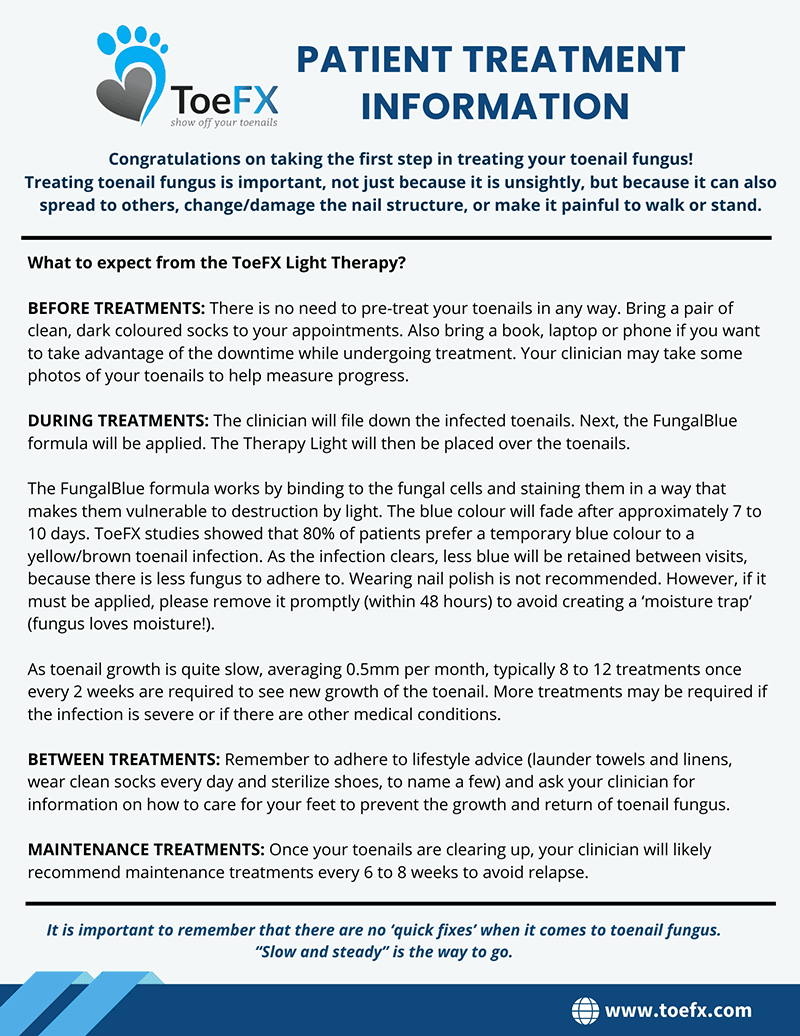
ToeFX can be appropriate for adults who have confirmed or suspected toenail fungus and who prefer a localized, non-systemic option. It is often considered when topical treatments have not fully resolved the infection or when oral medications are contraindicated or undesirable.
Candidates should have realistic expectations: because toenails grow slowly, cosmetic improvement may take months to appear. Patients with mild-to-moderate infection and healthy surrounding skin typically respond best, but each case is evaluated individually.
Individuals with complex medical histories—such as those with peripheral vascular disease, significant immune compromise, or uncontrolled diabetes—should undergo a careful medical review first. In these situations, ToeFX may still be used as part of a coordinated plan that addresses broader health considerations.
If you’re unsure whether ToeFX is appropriate for your situation, an initial consultation will clarify candidacy and the most responsible path forward.
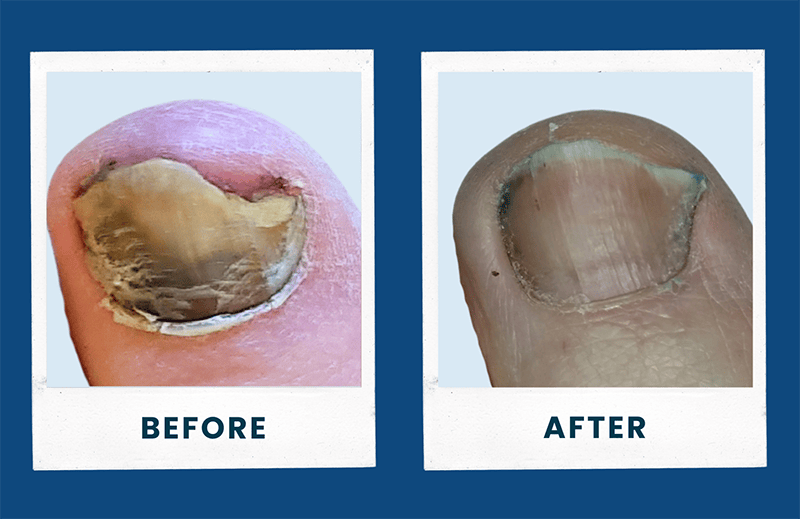
Visible change after treatment follows the natural pace of nail growth. The infected portion of the nail is not instantly replaced; instead, healthy nail gradually emerges as the new matrix produces clearer, stronger nail material. This process typically spans several months.
Clinical images are useful to document progress, but individual results vary depending on factors such as the severity of infection, nail thickness, and personal nail growth rate. Rather than promising immediate cosmetic restoration, clinicians focus on measurable, long-term improvement and prevention of recurrence.
Occasional maintenance sessions or adjunctive home measures may be recommended to support the long-term health of the nail and to reduce the chance of reinfection. Monitoring at regular intervals allows adjustments that align with each patient’s healing trajectory.
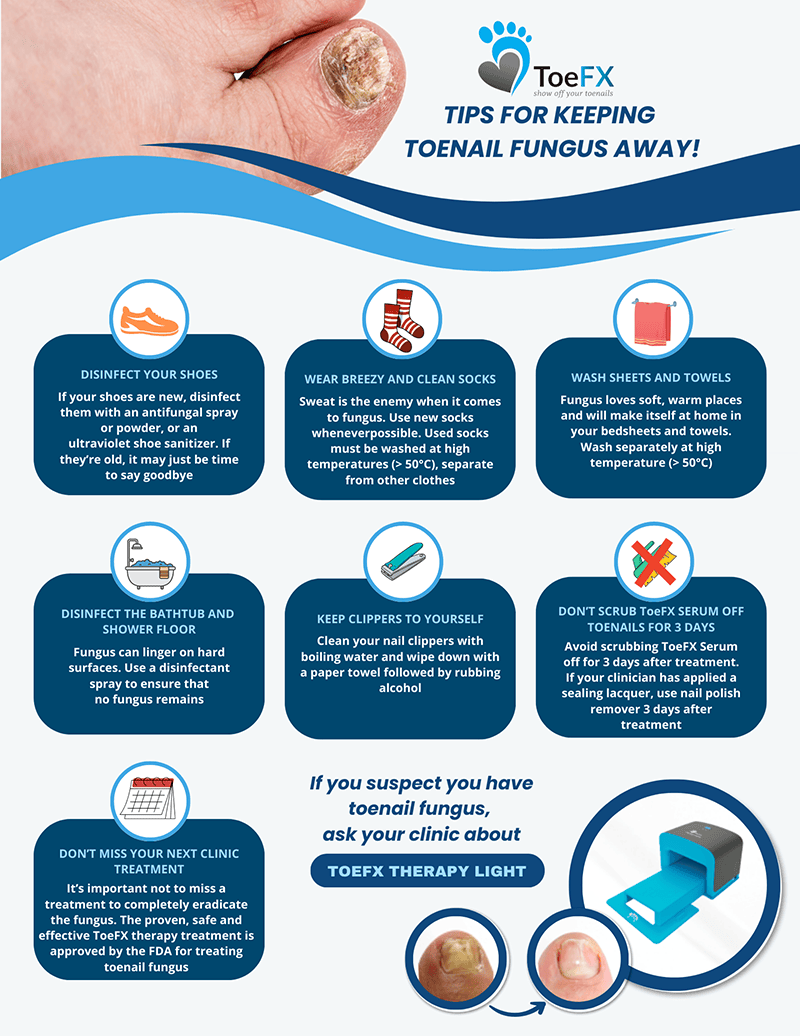
Long-term success depends not only on in-office treatment but also on consistent preventive habits. Keeping feet clean and dry, rotating shoes to allow them to air, and choosing breathable socks and footwear all reduce the moist environments fungi favor.
Regular trimming and appropriate nail care help prevent debris from accumulating under the nail plate. We also recommend cleaning or replacing insoles and using shoe disinfectants when indicated, particularly if multiple household members experience fungal issues.
For patients with circulation problems or diabetes, coordinated foot care is essential. Routine check-ins and prompt attention to any new changes in the nail or skin help protect overall foot health while supporting the outcomes achieved with ToeFX therapy.
ToeFX is one of several modern, non-invasive options for managing toenail fungal infections. If you’re interested in learning whether this therapy aligns with your goals, we recommend a clinical assessment to review your nail condition and medical history. Our team will outline realistic expectations and collaborate with you to create a thoughtful plan.
Please contact us for more information or to arrange an evaluation — we’re happy to help you determine the best approach for healthier nails over time.
Request Consultation Call Our OfficeMedically reviewed by Dr. Tamara Fishman, DPM Updated September 17, 2026
At Primary Foot Care Center, Inc., ToeFX therapy is a localized, photodynamic treatment that combines a specially formulated, photoactive serum with a specific light wavelength to target fungal organisms beneath the nail plate. When the light activates the serum, chemical reactions disrupt fungal cells and reduce their ability to reproduce. This focused action treats the infection under the nail without exposing the rest of the body to systemic antifungal medications.
Treatments are delivered in a series of sessions spaced to allow the nail to respond and for healthier nail material to grow out. The light is designed to penetrate the nail without generating heat or damaging surrounding skin, making sessions generally comfortable for patients. Because the therapy acts locally, it avoids the systemic side effects that some patients experience with oral antifungals.
Good candidates are adults who have confirmed or suspected toenail fungal infections and who prefer a localized approach without systemic medication. People with mild-to-moderate involvement and healthy surrounding skin typically respond best, although each case is evaluated individually. ToeFX is often recommended when topical agents have not fully resolved the infection or when oral antifungals are contraindicated or undesirable.
Patients with complex medical histories, including uncontrolled diabetes, peripheral vascular disease, or significant immune compromise, should undergo a careful medical review before treatment is started. In many of these situations ToeFX can still be used as part of a coordinated plan that addresses broader health concerns and monitoring needs. An initial consultation clarifies candidacy and the most responsible course of care based on overall health and nail condition.
The number of sessions varies by severity and nail growth, but providers typically plan a series of treatments spaced weeks apart to allow the nail to respond. Visible cosmetic improvement follows the natural pace of nail growth, so measurable change is usually seen over several months rather than days. Clinicians monitor progress and adjust the schedule as needed instead of relying on a fixed, one-size-fits-all approach.
Because the infected portion must be replaced by new, healthier nail, patience and adherence to follow-up visits are important parts of the process. Your provider may photograph and measure nail changes to document progress and determine whether additional sessions are warranted. Occasional maintenance treatments or adjunctive at-home measures may be recommended to support long-term results.
ToeFX therapy is considered safe for most patients because it targets the infection locally and avoids systemic drug exposure. Side effects are typically minimal and may include transient redness, mild irritation, or temporary discoloration related to the photoactive serum. Severe reactions are uncommon, but any unusual symptoms should be reported promptly to the treating clinician.
Clinicians trained in photodynamic therapies follow standardized protocols to minimize risks and to protect surrounding tissue during treatment. A pre-treatment assessment helps identify contraindications and ensures the therapy is appropriate for each patient’s medical history. Your care team will review possible risks and answer questions during the consultation so you can make an informed decision.
ToeFX differs from oral antifungals by delivering treatment directly to the infected nail with no systemic exposure, which can be important for patients who cannot tolerate or should avoid oral medications. Topical antifungals may struggle to penetrate thickened or crumbly nails, whereas ToeFX uses debridement plus light-activated serum to reach fungal material under the nail plate. At the same time, oral medications can be effective for certain patients, so the choice of therapy depends on individual goals and medical circumstances.
Many practitioners view ToeFX as one component of a comprehensive strategy that may include topical agents, nail care, and lifestyle measures to reduce recurrence. Research and clinical experience guide how these options are combined, with an emphasis on safety and realistic expectations. Your provider will recommend the approach that best balances effectiveness, safety and convenience for your situation.
A typical ToeFX visit begins with focused nail preparation, which often includes debridement to thin the nail plate and remove debris that can block light penetration. This step is painless for most patients and improves exposure of the infected area so the photoactive serum and light can work more effectively. Preparation may also include trimming and inspection of surrounding skin to ensure there are no open wounds or active infections that require different management.
Once the nails are prepared, the clinician applies the photoactive serum and positions the ToeFX light device over the treated toes for the prescribed activation period. Sessions are brief and usually comfortable, requiring no sedation or anesthesia, and most patients can resume normal activities immediately afterward. The clinical team documents the treatment and schedules follow-up based on your individualized plan.
Before a session, avoid nail polish, artificial nails and topical products that could block light penetration, and follow any instructions your provider gives about cleansing or footwear. If you have thickened nails, an in-office debridement is often performed at the start of treatment to improve outcomes rather than requiring extensive at-home preparation. Providing an accurate medical history and mentioning medications or conditions that affect healing helps your clinician tailor the plan safely.
After treatment, keep the feet clean and dry, rotate shoes to allow airing, and choose breathable socks and footwear that reduce moisture buildup. Regular trimming and appropriate nail hygiene prevent debris accumulation beneath the nail plate and support healthier regrowth. Your provider may recommend specific shoe disinfectants or care routines and will set follow-up visits to monitor progress and reinforce preventive measures.
Patients with diabetes or circulation issues require careful assessment before ToeFX therapy because these conditions can increase the risk of complications. That assessment may include checking vascular status, skin integrity and overall foot health so the care plan can address any additional risks. In many cases ToeFX can still be offered as part of a coordinated management plan, but it is important that wound risks and healing capacity are considered first.
Coordination with your primary care provider or endocrinologist may be advised to optimize medical factors such as glucose control and circulation before beginning treatment. Close monitoring and more frequent follow-up are often used for patients with underlying conditions to ensure safe progress and to address issues early. If you have diabetes or peripheral vascular disease, an initial consultation will clarify whether ToeFX is an appropriate option and how it fits into your overall foot care strategy.
Primary Foot Care Center, Inc. pairs advanced technology with hands-on clinical care to deliver ToeFX therapy using standardized protocols and trained staff. Our clinicians perform thorough initial evaluations, select the appropriate number of sessions, and perform professional nail preparation to maximize light exposure and treatment consistency. We also use objective documentation, such as photographs and measurements, to track nail improvement over time and to tailor the plan as needed.
Patient education is an integral part of our approach; we provide clear guidance on at-home care, footwear choices and preventive steps that support long-term outcomes. Follow-up appointments are scheduled to monitor regrowth and to determine whether adjunctive therapies or maintenance sessions will help reduce recurrence risk. Our goal is to combine evidence-informed treatment with personalized care so patients receive safe, sustainable results.
Reducing reinfection risk depends on consistent preventive habits, including keeping feet clean and thoroughly dry and wearing breathable socks and shoes. Rotating footwear and allowing shoes to air between uses helps prevent the moist environments fungi favor. Cleaning or replacing insoles and using recommended shoe disinfectants can reduce household reservoirs of fungal organisms.
Avoid sharing socks, shoes or nail tools with others, and maintain regular nail trimming to prevent debris buildup under the nail plate. Address any new or recurrent nail changes promptly with a clinician so problems are identified early and managed before they worsen. Routine foot care and periodic monitoring are practical steps that support the results achieved with in-office therapies like ToeFX.
Send us a message and a member of our team will get back to you shortly. For urgent concerns, please call the office directly.

Phone: